Why Is It Important to Understand Customer Needs?
Discover how understanding customer needs improves sales, trust, payment, shipping, and delivery processes through practical and relatable examples.

Why Is It Important to Understand Customer Needs?
A customer asks about a product. You show it, explain the price, and answer their questions. The customer thanks you and leaves.
The sale did not happen. But why?
“They probably thought it was too expensive.”
Maybe.
“They did not like the product.”
That is also possible.
“They were never going to buy anything anyway.”
One of the most popular explanations in sales! However, the real problem is often much simpler: we may not have understood what the customer actually needed.
Do customers always know what they want?
Partly.
Customers usually understand the problem they are experiencing, but they may not know exactly which product can solve it.
For example, a customer might say:
“I am looking for a sturdy chair.”
They may not simply want a durable chair. Perhaps they have a young child and need something easy to clean. Maybe their kitchen is small. Perhaps the chair will be moved frequently, so it also needs to be lightweight.
There may be several different needs behind the request for a “sturdy chair.”
Should we immediately show them the strongest model in the store?
No. We should ask a few questions first.
The right question is more valuable than a long product description
During a sales conversation, we sometimes feel the need to explain every feature:
“This model is very durable, the materials are high quality, it comes in several colors, and it is manufactured using…”
Meanwhile, the customer may be thinking:
“That sounds great, but will it fit in my kitchen?”
The problem is not that we know too much about the product. The problem is that the information has not yet been connected to the customer’s needs.
A few simple questions can completely change the direction of the conversation:
- Where will you use the product?
- Which feature matters most to you?
- What problem did you experience with your previous product?
- Do you have a preference regarding size, color, or material?
- When do you need the product delivered?
- Do you have an approximate budget?
These questions are not meant to turn the conversation into an interrogation. They help us find the right solution. When the tone is friendly, customers can explain their needs more comfortably.
Listening is not waiting for your turn to speak
While the customer is talking, we sometimes start preparing our answer.
“All right, I know exactly which product to recommend.”
Wait a moment… The customer has not finished speaking yet.
Real listening involves noticing not only the words being used but also the customer’s priorities and concerns.
A customer who says, “Price is important to me,” does not always want the cheapest option. They may want better value and a product that will not need to be replaced shortly afterward.
For someone who says, “I need it immediately,” the delivery date may matter more than the available colors.
Even the phrase “I want something high quality” can mean different things. Quality may mean durability to one person, appearance to another, and ease of use to someone else.
The same product can be the right choice for different customers for completely different reasons.
Should every customer receive the same recommendation?
Of course they can.
Then we can spend the rest of the day wondering why some sales conversations went nowhere.
Making a recommendation without understanding the customer is like shooting an arrow with your eyes closed. You may hit the target, but luck probably deserves some credit.
When we understand the need, we can connect product features directly to the customer’s expectations.
General product statements
- This model is durable.
- This product is easy to clean.
- This product is currently in stock.
Customer-focused explanations
- This model is suitable for your needs because it is more durable under frequent use.
- It will be easier to use and clean in a home with children.
- Since it is in stock, it is the safer option for your requested delivery date.
The product has not changed. Its value has simply been connected to the customer’s life.
Sometimes the right solution is not making the sale
Yes, I am saying this in an article about sales.
Recommending an unsuitable product simply to complete a sale may look successful in the short term. Later, it can lead to returns, complaints, dissatisfaction, and a loss of trust.
If there is no suitable product available, saying so clearly may be the best approach.
It may not produce a sale that day, but it can build trust. A customer who trusts you may return, recommend you to someone else, or contact you when a suitable product becomes available.
Good sales are not only about delivering a product. They are also about creating the right expectations.

Then there is payment, shipping, and delivery
Understanding customer needs is not limited to choosing the right product. Payment, delivery, and operational details also matter.
The product has been selected. The color and measurements are confirmed.
Just as you begin to relax, the customer asks:
“Shipping is included, right?”
You quietly ask yourself:
“Did we ever discuss that?”
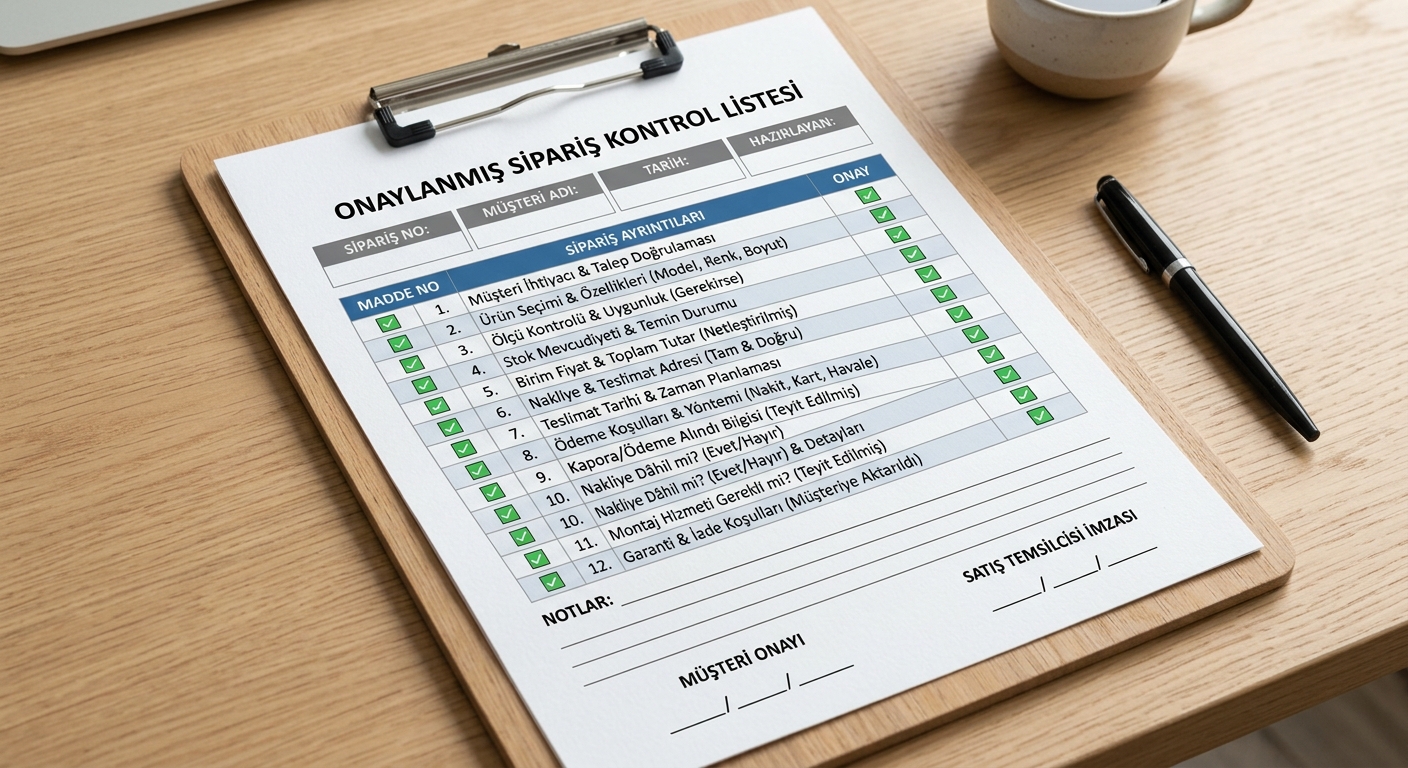
When certain subjects are not clarified at the beginning, small details can become major problems later:
- Is shipping included in the product price?
- When and how will payment be made?
- Is a deposit required?
- On which date will the product be delivered?
- Will the product be carried upstairs?
- Is installation included?
- What are the return and exchange conditions?
- Can changes be made after custom production begins?
The customer may like the product, but the sale is not truly complete if they do not understand the delivery cost, payment terms, or expected delivery date.
Unspoken details do not disappear. They usually return on delivery day.
Understanding the customer also makes operations easier
This is not only about customer satisfaction.
When the correct information is not collected, the wrong product may be prepared, delivery dates may be confused, measurements may be incorrect, or the customer may expect a completely different result.
Then the phone calls begin:
- “Why did the product arrive like this?”
- “This is not what I asked for.”
- “Wasn’t the delivery scheduled for today?”
- “Wasn’t shipping included in the price?”
Nobody misses those conversations.
When the usage area, measurements, product specifications, payment terms, delivery date, and special requests are confirmed before the order, the after-sales process becomes much easier to manage.
Five minutes of clear communication can prevent hours of unnecessary work.
It is easy to say, “This customer will never buy anything”
Sometimes we decide what kind of customer we are dealing with within the first few minutes:
“This person is only asking about prices. They will never buy anything.”
Then they return and place an order without negotiating.
Another customer may appear extremely confident and trustworthy:
“I am definitely buying it. Go ahead and prepare everything.”
The product is prepared. You call. You send a message. They are never heard from again.
Does this mean we should never evaluate customers?
Of course not. But we should not treat a first impression as a final decision.
A quiet customer may be uninterested, or they may simply be thinking carefully. A friendly and talkative customer may be reliable, or they may still be undecided.
Clothing, communication style, and willingness to negotiate do not determine whether someone will complete a payment.
First impressions can be useful, but they can also be wrong. The sales process should not depend entirely on personal assumptions.
Trust matters, but a clear process is safer
Trusting a customer is a good thing. Building the entire commercial process around trust alone may be a little too optimistic.
“Just prepare the product. We will sort out the payment later.”
It sounds friendly. Unfortunately, accounting systems do not operate on friendly sentences.
Deposits, written order summaries, delivery addresses, payment plans, and customer confirmations are not signs of distrust. They protect both the customer and the seller.
The right approach is not to treat everyone with suspicion. It is to apply the same clear process to everyone:
- Confirm the product and its specifications in writing.
- Explain the total price and any additional costs.
- Agree on the payment and deposit terms.
- Clarify shipping and delivery details.
- Ask the customer to approve any special requests.
This reduces the chance of hearing:
“But that is not what I understood.”
We can trust people. We should be more careful about trusting our memory, assumptions, and verbal agreements to work perfectly.
Is a customer asking about price only interested in price?
Sometimes the customer simply asks:
“What is your best price?”
Our first thought may be:
“Here we go again. They are only comparing prices.”
However, several different concerns may be hiding behind that question:
- They may be worried about exceeding their budget.
- They may be comparing the product with another option.
- They may want to understand the total cost, including shipping and installation.
- They may be wondering whether the cheaper option has an important disadvantage.
- They may be ready to buy but want to confirm their decision.
Price is obviously important. However, the number on the label may not be the only factor affecting the customer’s decision.
A more expensive product may offer better value because of its durability, faster delivery, or after-sales support. To explain that value, we first need to understand what matters to the customer.
Conclusion: Understand the person before the product
Understanding customer needs is not a complicated technique. It involves being curious, asking the right questions, listening carefully, and making recommendations without rushing.
Payment, shipping, delivery, and special requests should also be discussed clearly. A successful sale is completed when the entire process is understandable and manageable for both sides.
Customers may not always express their needs perfectly. The role of a salesperson is not simply to show products but also to help clarify those needs.
The next time a customer says, “I need something sturdy,” do not immediately walk toward the shelves.
Ask them:
“Where and how are you planning to use it?”
Then discuss the budget, delivery, and expectations.
That may be the moment when the real sales conversation begins.``